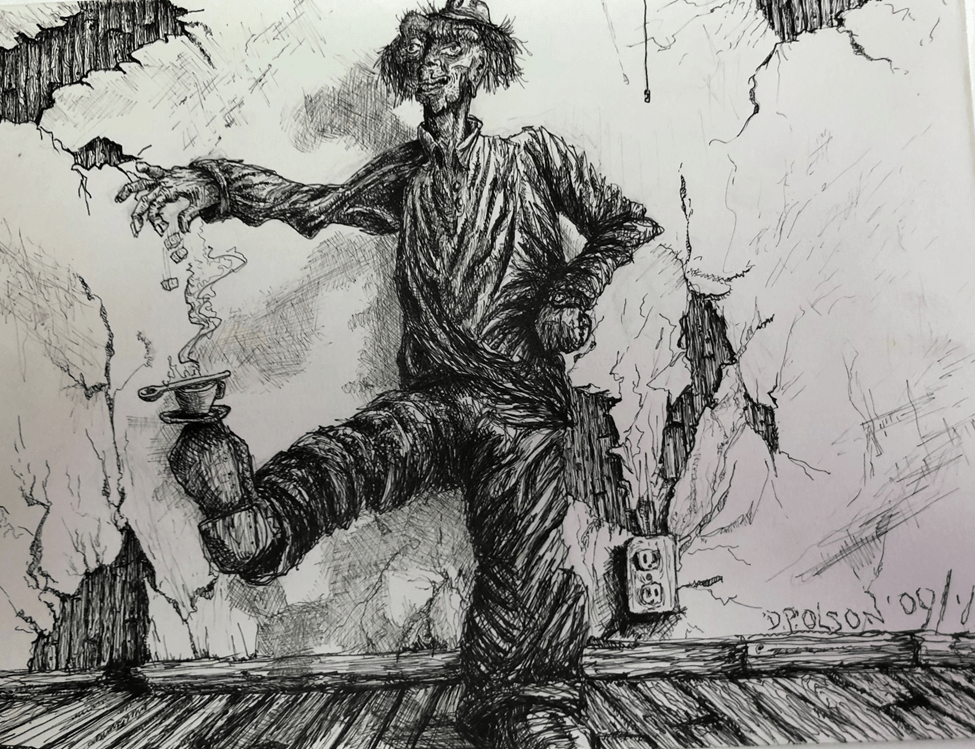
Two Sugars Please

Dave Olson

About the artist

Dave Olson has been a construction worker, a school bus driver, a student, and a teacher. He is in his 22nd year in the West Windsor-Plainsboro School District where he works as a special educator. He is married and has two grown sons, and his family is everything. He has had drawings published in the Kelsey Review.

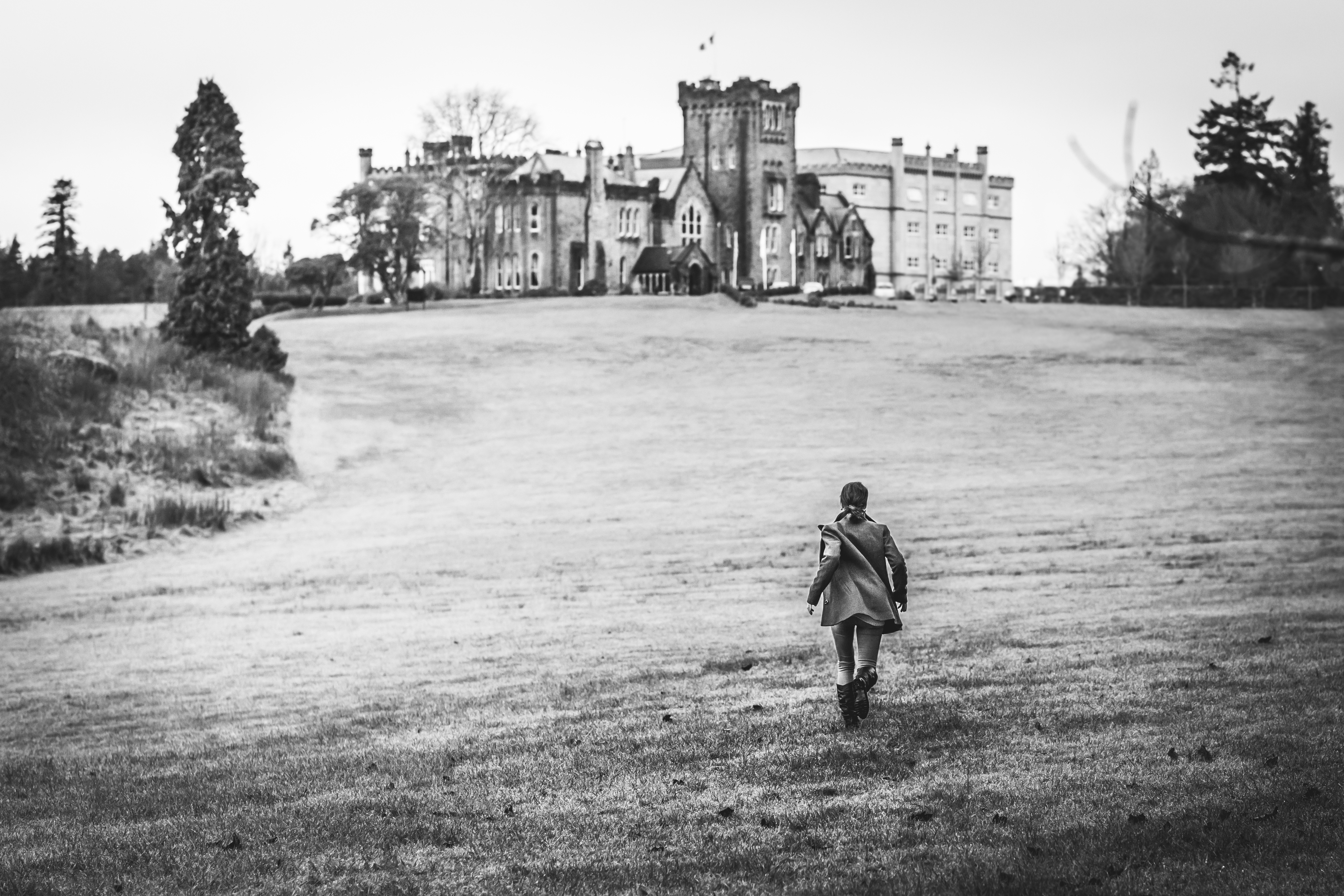
One More Month

Lauren Fedorko

About the artist

Lauren Fedorko, M.Ed., is an Adjunct Professor of writing at Rutgers University, teaches AP Literature and Creative Writing, and advises the Gay Straight Alliance for her students. Her passion for writing is longstanding and ongoing, composed mostly of poetry and creative non-fiction. She enjoys exploring, good company, and traveling the world every chance she gets. Her work has previously been published in the Kelsey Review and The Inquirer.

From the Editor…

As I was putting together this issue, I found myself smiling. Not because the pieces in this issue are especially happy—that’s never the case with literature, is it?—but because of the honesty and playfulness and even hope that runs through many of these pieces. From Janus C.’s hilarious and heartfelt horror-comedy to Ilene Dube’s eccentric bather, from Lauren Stanzione’s youthful cry “I Am Meant to Be Here” to Harvey Steinberg who is “Still Reading at Age 88,” these pieces, many of which were written during the pandemic, carry within them a spark to light the darkness. There is a sense that the act of writing these pieces, making meaning out of the moments and memories and pain and strangeness of life, is an act of hope. We may not be able to make sense of it all, but we can make art out of it, and perhaps we can even make it beautiful.

This issue has been woven together by the generous hands of so many people, who I would be remiss not to thank. First and foremost, thank you to my fellow Kelsey Review editors, Roberta Clipper, Luray Gross, and Ellen Jacko, whose artistry and wisdom helped curate this issue. Thank you also to the support of the Liberal Arts Department, including Dr. Dylan Wolfe, former Interim Dean of Liberal Arts during the submission phase of this year’s issue, and Dr. Robert Kleinschmidt, current Dean of Liberal Arts. Finally, thank you to Dr. Jianping Wang, MCCC President, and VPAA Dr. Robert Schreyer for their support of this project. It is more important than ever to support the arts, and these many people have shown their support for Kelsey Review.

Finally, a sad note: we lost an extraordinarily bright light at MCCC this year with the passing of Communications Professor Kathi Paluscio, a creative individual who was an ardent supporter of the arts. Our first poem, written by her colleague Michael Griffith, is a tribute to her, and this issue is dedicated to her memory.

Take care,

Jacqueline Vogtman

Editor

From the President…

Mercer County Community College is delighted to share with you the work of many local writers and artists in the Kelsey Review, the College’s literary journal. This year marks Kelsey Review’s 40th issue, and it is a pleasure to see how this journal continues to serve the community by sharing the work of talented individuals who live and work in the larger Mercer County area. This journal is just one of the many ways the College highlights and shares the cultural wealth of our area.

MCCC directly serves thousands of county residents, and indirectly tens of thousands through its many ties to the community. WWFM broadcasts quality programming to the county, and even the world through the internet. Kelsey Theater stages a wide range of dramatic performances for county audiences, who also have access to the college’s Art Gallery. Our nationally-ranked MCCC athletic teams offer chances to root for stellar local athletes. Learn more about the college and Mercer County at www.mccc.edu.

Kelsey Review is now available online, where it can be shared worldwide! To keep up with the Review year-round, please “like” the publication on Facebook.

The Kelsey Review is distributed in part through the Mercer County Library System, and funded by Mercer County Community College. Each edition of the Review presents professional-quality poetry, fiction, non-fiction and art that provokes thought, provides inspiration, and offers comfort during challenging times. Enjoy what you find here.

Sincerely,

Dr. Jianping Wang

President

Mercer County Community College

Kelsey Review 38: Fall 2019

fedorko lambertville dusk

-Lauren Fedorko, “Lambertville Dusk”       Click below to access issue 38 of Kelsey Review, Mercer County’s literary journal:

KELSEY REVIEW 2019

In addition to the beautiful pieces of poetry, fiction, nonfiction, and black-and-white art contained in this issue, we have two color photographs by Lauren Fedorko, above and below, published exclusively online. The print journal was distributed to contributors and in the Mercer County area in Fall of 2019 and early winter 2020.

FEDORKO SEASCAPE

-Lauren Fedorko, “Seascape”

Kelsey Review 37: Fall 2018

Kelsey Review 37

Fall 2018

KR 37 COVER ART FIELD

From the President

From the Editor

 Art:

Poetry:

Fiction:

Nonfiction:

Fruit Flies, Fox & Squirrel

Wanda Praisner


I discard an old cantaloupe,
fruit flies still hovering over it,
when I notice color & movement
out by the fence.

Unmistakable. A fox, its russet
coat highlighted in morning sun
as it pumps away at the kill,
a squirrel. It gnaws

at the head, perhaps the brains
tasty as a rabbit’s, to an owl.
For an hour it eats, maneuvers it,
even sits at times

at the propped-up meal,
top half-gone. I tap
on the window, it looks at me,
then returns to feed,

its backside an arch
like the bend of a bittersweet branch.
It finally stops, goes back
to leftover pieces, licks

its face with its black front paws,
then picks up the remains
& disappears. I go out,
spook cedar waxwings

at the birdbath as I lift off
the slab of ice. Nothing remains
by the fence—no bone, tuft of fur,
only matted-down myrtle

& a few old oak leaves, tawny
in sunlight. I console myself that
the squirrel had its time in my yard.

A fruit fly lives only a day.


______________________________________________________________________________________

About the author:

Wanda S. Praisner, a recipient of fellowships from the NJ State Council on the Arts, the Dodge Foundation, Provincetown Fine Arts Work Center, and VCCA, has won he Egan Award, Princemere Prize, Kudzu Award, First Prize in Poetry at the College of NJ Writers’ Conference, and the 2017 New Jersey Poets Prize. She was a featured reader at the Governor’s Conference on the Arts, as well as the Dodge Poetry Festival. She’s appeared in Atlanta Review, Lullwater Review, Prairie Schooner, and elsewhere. Her latest books are Natirar (Kelsay Books, 2017) and To Illuminate the Way (Kelsay Books, 2018). She’s a resident poet for the state.


Marraine de Guerre, Godmother of War

Wanda Praisner


          In memoriam: Pfc. F.F. Villani,
          
plot A, Row 18, Grave 38,
          
the Henri-Chapelle American Cemetery

 A statue of the Archangel looks down
on a woman kneeling by a white cross,
anemones and mums in hand.

A Godmother of War, Regine, like a thousand
others, has adopted a grave of an American soldier—
one of 30,000 fallen in the Battle of Hutgen Forest
to liberate Belgium from the Nazis.

Nothing known of her Pfc, named Frederick,
until his sister came in 1957 to take soil
from his grave, home to Newark, New Jersey.

In his last V-Mail, October 1944,
he asked for single-edged razor blades.

Regine’s father, ten years old then, remembers
running after GIs for chocolate and gum.
Frederick’s father’s hair turned white overnight
after receiving the telegram.

Regine places the bouquet on the headstone,
her right hand leaning on an arm of the cross.


___________________________________________________________________________

About the author:

Wanda S. Praisner, a recipient of fellowships from the NJ State Council on the Arts, the Dodge Foundation, Provincetown Fine Arts Work Center, and VCCA, has won he Egan Award, Princemere Prize, Kudzu Award, First Prize in Poetry at the College of NJ Writers’ Conference, and the 2017 New Jersey Poets Prize. She was a featured reader at the Governor’s Conference on the Arts, as well as the Dodge Poetry Festival. She’s appeared in Atlanta Review, Lullwater Review, Prairie Schooner, and elsewhere. Her latest books are Natirar (Kelsay Books, 2017) and To Illuminate the Way (Kelsay Books, 2018). She’s a resident poet for the state.


Susquehanna

D.E. Steward


On I-80 from Newark on the way west to Wellsboro in Pennsylvania as if fleeing the thinning and diminishing urban sprawl in the empty Sunday dawn

“The roads are our nature shining / beyond delay, / fretting to race on ­– ”  (Les Murray)

Stop at one steep turnout, harvested forest below and all around, Kittatinny folds spread northward toward the Catskills, the first slate-colored juncos of the season, bright white outer tail feathers flashing away over a brush pile

Robert Frost’s snowbirds

At the next overlook above the Water Gap and the Appalachian Trail, another car alone, a happy medical school student proudly on her way out of the Bronx and into Pennsylvania for a rendezvous with a friend she met when they hiked it all, Georgia to Maine

Who knows her ethnicity, originally from somewhere, a small brown person with no accent in English, piercings and quirky clothes, got into medical school, took time to hike the Trail after she finished her undergraduate and this weekend rented a Zip Car and got back to it out of the city again

She said New England had the most open ridges and was the best, that the Carolinas and Virginia were monotonous green

The omnipresence of the Appalachian train, Georgia into Newfoundland, arcing northeastward, a terra-link for many to where it was whence they came

The front that walled us in before the Atlantic’s rivers encouraged the roadless ways that opened up the rest of North America

The ways in, St. Lawrence, Merrimack, Connecticut, Hudson, Delaware, Susquehanna, Potomac, James

Down on the Delaware itself to walk the Trail far enough northward to no longer easily hear the interstate, meet a typically civilized sixtyish Veronese, maybe a technician, engineer or craftsmen, Sundays he drives out from Essex County to hike, says it keeps him from nostalgia for the Dolomites, has seen bears, coyotes rarely

Then over the river and on into the garishly peculiar strip-mall Poconos of Monroe County, Pennsylvania, the newest commuter zone, stand-alone development houses perched for the I-80 run back across North Jersey to the George Washington Bridge

The whole planet is roads and cars

We all were there for the Chelyabinsk meteor in early 2013, that near-Earth asteroid explosion out east of the Urals, when their open highway and speeding cars looked like every open highway with speeding cars

We had the clips almost simultaneously with the event, a lot of dashboard cameras there

From way out there back of beyond for most of the world, while in Chelyabinsk of over a million with all its bridges, roads, streets, cars, they are the nexus of the world

There they drive to live and live to drive like nearly everyone else on smooth asphalt, engineered grades and curves, shoulders, with good signing and painted center lines, shoulder and edge markings

Cars worldwide are the defining contraption of the century present, century past

Allowing us to sail the hills and ridges, course along the rivers and the coasts, loop around congestion, gun up high mountains, go to deserts, take easy access to almost anywhere, glimpse asteroid explosions and car-bomb chaos

As simultaneously cities draw us into ourselves

The Eurasian norm, to live within the walls and venture out to the land, but now everywhere including Monroe County, PA, we travel everywhere outside at will

As the hamlet, village, town that has been so kind to our mortalities, becomes strip mall, filling station, convenience store

But we do what we do where we do it and will always be whether hydroponically in space colonies or underground or planting potatoes in a subsistence dystopian extreme, potato eyes down, heeled in, with a knowing wink to the kids following along to learn

We shall see

Downstream

The past has always been the future that is already there, but we cannot see the future and its shaggy little islands well enough to respond to it

So we go ahead into the expansive Pennsylvanias of our lives, trying to drive past the past as we imagine

“…the past, which is the live dark matter that flows and undismissably with us, and impends unseen over every point we reach”  (Les Murray)

The kenning of vivid mind-hunger

Of the road sometimes and always through the ease of imagination

After Wellsboro coming down the Susquehanna’s west bank on US 15 from Sunbury toward Harrisburg

November’s vellum cornhusks

Maples naked on the slopes and against the ridgeline sky with fall’s leafless red hickories and ridge white oaks

Vaulting of the bare Appaloosa-patched white sycamores on the creeks and flats before reaching the river

The Susquehanna’s broad sweeping bends, headland bluffs profusion of shaggy little islands in the stream

Imagining what else I’ve seen like this

“Imagination is nothing but extended or compounded memory” ­ (Giambattista Vico)

But then how to imagine what will appear next

Picturing what you have yet to see from what you have already known

Extending regional memories of other river roads

On along the Saguenay, St. Lawrence, Penobscot, Merrimack, Connecticut, Hudson, Delaware, Potomac, James, Missouri, Mississippi, Colombia

And glimpses from bridges and their approaches and often from the hills beside

All the rivers

Rhone, Rhine, Imjin, Snake, Yukon, the Cristalino to the Amazon

The bliss that flows from remembering things past

Natsukashi

From big rivers, mountains, large lakes, seacoasts and backlit skies

The Susquehanna’s islands’ scrubby brush and high-water saplings, driftwood, their apparent slant, everything points downstream

People here claim it is the widest unnavigable river in the world

So wide that its valley has rarely flooded in human times

“It is not that Americans exist only on the surface, but that their surface is where their depths are supposed to be”  (Terry Eagleton)

As before leaving Tioga County back up above Williamsport in Liberty, Pennsylvania, off I-99 on the way south from Wellsboro, a rural auction house Sunday gun sale that began at ten-thirty after or instead of church

ASSAULT RIFLES in .223 & .22; Browning BPS 12 gauge; WINCHESTERS: Post 64 model 88 in .308; 1892 in 32/20; two 1894 in 30/30 and 32/40; Rare model 71 Deluxe in .348 cal; also Marlin 1895 in 38/56 cal; Remington models 591 and 592M in 5mm; HAND GUNS: Smith and Wesson 686 SS .357 magazines, etc.

A Horton crossbow, three Malayan throwing daggers, about seventy boxes of different caliber bullets, at least fifty antique wooden ammo boxes, German dagger by Siegfried Waffen of Soligen, scope mounts, “a good selection” of holsters

With ammunition and reloading tools and casings, bayonets, swords, big knives, and suchlike paraphernalia table-displayed to be auctioned after the many dozen guns

“It might be interesting if, after spending too much of the last fifty years talking in circles [about the gun issue], we in America could see ourselves as reluctant tourists in the land of our own psyches. It might be helpful to begin shifting our discussions to the way in which all our souls are broken when we dehumanize by general habit”  (Patricia J. Williams)

But then the peaceful Pennsylvania woods, over half the state in forest

Rolling south toward through Tioga and Lycoming toward Williamsport on US15, almost nothing but trees, hardwood trees with conifers in the gorges

And in Northumberland where the West Branch of the Susquehanna joins the main river, Joseph Priestley’s Georgian-Federalist house lies back from the water on the open shore

The apparently rational English Unitarian, a millennialist sure that he would see Christ’s return, worked on phlogiston theory chemistry to his death there in 1804

Trapped in their times and their beliefs weeks from “the news,” five days rough travel west of the port of Philadelphia over two hundred years ago

Querying minds making the most of their ideas and what substantiations they had, and imagining the rest in extension of their compounded memories

Tourists in the land of their own psyches on the frontier of their Anglo world like many who landed here and pushed west with the goal of clarifying the soul and edifying the social condition

“The good and happiness of the members, that is the majority of the members of the state, is the great standard by which every thing relating to that state must finally be determined”  (Joseph Priestly)

Defender of the French Revolution in 1785 Priestley said, “we are, as it were, laying gunpowder, grain by grain, under the old building of error and superstition,” arrived in Philadelphia to find his kindred Quakers fat and smug so kept going

As it were

And when to his chagrin slave craftsmen were brought in on the construction of his big new Northumberland house with his old man’s new world chemistry laboratory he demurred when told that there was no one else to do the job

As Günter Grass put it, Weimar will always be down the road from Buchenwald


_____________________________________________________________________________________

About the author:

D.E. Steward has never had a pedestrian job since college. He has nearly a thousand publication credits in journals and has also published Chroma Volumes One through Five (Archae Editions, Brooklyn, 2018, in press).
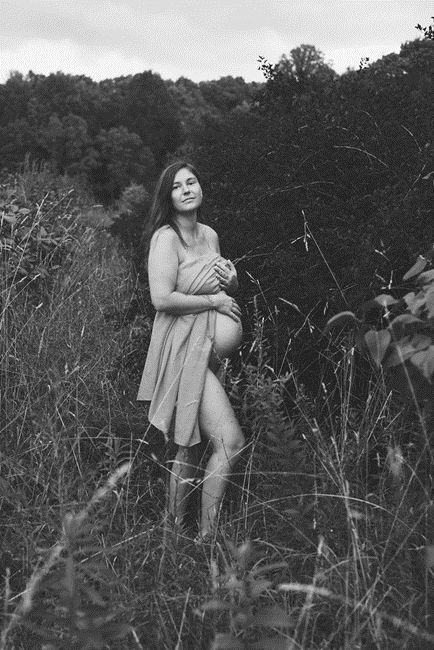
 

Italiana

Lauralee Leonard


And when the garlic hits the oil
and the sizzling begins,
a memory of you opens.

Your tall unbent self
sturdy as an ancient tree,
standing, in your blue morning robe,
cooking some feast required by the law of families.

Did you ever speak within all those hours?
Pots laid on top of pots –
no inch of kitchen untouched
by the splatter
of your deep red gravy.


____________________________________________________________________________________________

About the author:

Lauralee Leonard has been a resident of Mercer County since 1995 and has also worked in the county for the majority of that time.