Lauren Fedorko

Mid-Hudson Fog

Black and white photo of a foggy bridge.

About the artist:
Lauren Fedorko, M.Ed., is an Adjunct Professor of writing at Rutgers University, teaches AP Literature and Creative Writing, and advises the literary magazine for her students. Her passion for writing is longstanding and ongoing, composed mostly of poetry and creative non-fiction. She enjoys exploring, good company, and traveling the world every chance she gets. Her work has previously been published in the Kelsey Review and The Inquirer.

Book Review: Tidal Wave, by Dennis H. Lee. Passager Books, 2020.

Jacqueline Vogtman


Dennis H. Lee’s Tidal Wave, inaugural winner of the Henry Morgenthau III Poetry Prize for a first book of poetry for a poet 70 years or older, does what all great works of literature do: it uses specific moments to reveal universal truths about shared human experiences. This extraordinary collection has a heavy emphasis on place, beginning and ending with images of a Coney Island childhood, touching down throughout the book in Brooklyn, the suburbs, and the Catskills. Lee uses vivid imagery to evoke these places, like the final line of his opening poem “Coney Island, July 4, 1952”: “Tonight’s sky will be brighter than the Ferris wheel.”

While many of the poems in this collection evoke the past, many of them also speak to the experience of growing older. The second poem in the book is titled “Measuring Our Time,” and the collection itself seems to do just that, moving between past and present. The poem “Candle in the Universe” is a funny and poignant memory of an elementary school astronomy lesson, while several poems narrate the absurdities of aging, especially in connection with the medical establishment, such as “The Man Who Had Nothing Wrong” in which a series of doctors and specialists perform tests on the speaker determined to find something wrong with him.

Indeed, the absurd plays a role in this collection. Consider the poem “The Barking Woman,” a fable-poem about a woman who wouldn’t stop barking, and the poem “Dryer Sheets,” which comments on suburban absurdity with a narrative about a woman who puts dryer sheets in her garden because she thinks they smell better than roses. Lee’s use of humor is one of the most entertaining aspects of this collection, including the hilarious poems “So What, You Wet Your Pants” and “Tea and Cream with a Coffee Bean” which follows a miscommunication with a barista.

But there’s a more serious side to Lee’s poetry as well. In the second half of the book, there is a series of four poems—“Blood Room,” “On Dark Wings,” “Fortune Cookie,” and “I Wish Now I Could Have Buried You”—that narrate the loss of a spouse. While the poems here focus on small moments, cumulatively they have a power and wash over the reader with, yes, a “tidal wave” of emotion. “On Dark Wings,” in particular, is a moving meditation on loss, and the use of repetition adds to the power of the poem, the first four stanzas beginning with the line “I held her hand,” and the final stanza breaking that pattern to state, “I held her dead hand.” It’s a heartbreaking poem, but an honest portrayal of grief.

Lee’s collection is one of heart and humor that will appeal to readers young and old, near and far, but I believe will be particularly resonant with readers who grew up on the East Coast in 1950s and 60s. This collection runs the gamut of human emotion and experience, but ends with jubilance in the face of fear. “Tidal Wave,” the final poem in the collection, is a long poem that ends with a memory. Lee writes, “I remembered a wave / at Coney Island when I was about six that lifted / me and carried me up the beach. People screaming. / Water began to cover me. Rain water. A deluge of rain. / I was running so incredibly wet and happy. That’s it.”  It’s a powerful image to end the collection, but a fitting one for a collection so powerful. 


About the author:
Jacqueline Vogtman is the Editor of Kelsey Review.

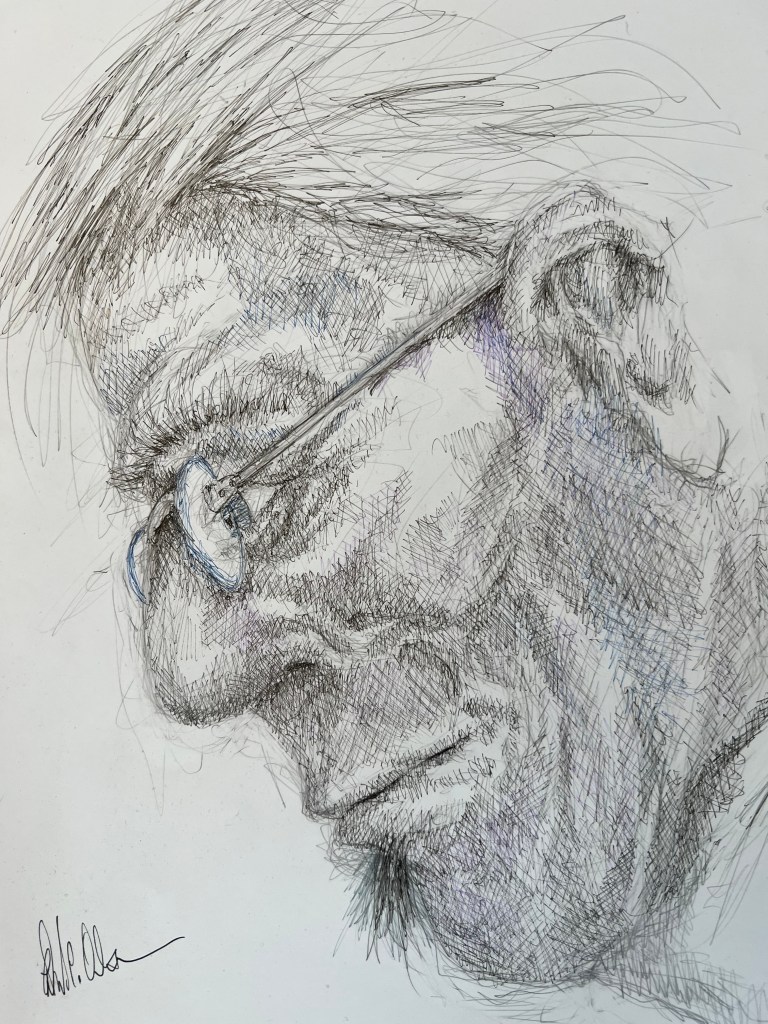
Pete

D.E. Steward


We slept in the same room for years  

“When we think of being we arrive at our real home”  (Heidegger)

Which is the sort of thing we would often talk about

He was serious

And we were serious together 

On a train through the Ukraine from Moscow to Sevastopol, he was in the corridor talking heatedly with two Iraqis 

Iraq had just reestablished diplomatic relations with the USSR, they were probably from the Iraqi embassy, older, seasoned

There were strong words, my brother’s raised-voice lecturing being countered in sputtering Arabic

They jostled him and then one went for him hard

Fast, I got him out of the corridor and back into a compartment

He was so intelligent, but would flash out impulsively 

And he never quite realized

When he was a Columbia graduate student once I took him to a bus upstate in Sidney on the Susquehanna, and it was late and lonely and we both cried

We sat there in the car waiting talking as we were rarely able to as men

About our mother probably more frankly than ever before

But he disallowed what I told him had really happened to us

He shouted me down, to stop telling him, to not say what I was saying, as though I were telling him in Arabic    

He was four when it all happened and he had buried it

At seven I would resolutely not forget

Only the two of us

As it always was after our family was gone

We talked so much about so many things

Brothers as only brothers can be 

With each other’s trust

And understanding

He always tried, he didn’t fade, he always tried

To play ball when he hated it, to be one of the group when I took him along with me

He liked model trains, wanted badly to own a monkey, had a drum major’s baton and practiced twirling 

He had a three-speed Raleigh when the rest of us had balloon-tire cruisers 

I cannot remember that he had a favorite color

Maybe blue, maybe only gray  

To avoid school at five and six he would lie in bed and plead a stomachache

So often he did not fit in

He was always responsible about important things and when he took sides he was on the right one

Quite often quixotic but remarkably convincing

He was polite, but witheringly caustic with the occasion  

He was the brother who older people liked

Once we drove together to Jalisco and he flew back to New York from Guadalajara

He would come from Paris to Switzerland to visit and we would go into the Alsace to hike, or to the Alps, or northern Italy 

And once he came all the way up to my Forest Service ranger station in the San Gabriels

Always a good brother in that way

And he was solicitous to a forlorn aunt whom I had almost nothing to do with

He had close friends when he was younger but dropped them soon after college

He was a beautiful man, although he was stubborn, and arrogant in the realms of his ignorance

Social with the need

Often magnetically attractive in social situations 

Constantly glib

Curious about what he didn’t know

Droll

And very funny at times

A tall, skinny, handsome, Princeton, multi-lingual, sometimes brilliant, lonely man     

Dead for a long time now 

Wiped away with other smudges and traces like the light grease from yesterday’s croissants

Traces, hair, dust, smegma, flakes of skin, with no reconciliation at all between fresh leavings and our deaths

He was alone for his forty-ninth birthday, a day like his other last days

He died four weeks later as if he was making a plane

And refused to share his doom with anyone

On his bed staring up at a ceiling fan silently reeling his thread of remaining time

Staring at the maples outside, listening to the familiar sounds of the house in which he had spent most of the nights of his life

Alone, thinking, he must have been deep in death fear

When he realized death was immediate he must have known terror

It must have been the agony of shame for him, with his self-justifying rationalizations and careful arrangement of lies

Maybe he observed to himself in that wry and charming way of his that at least he would not have to turn fifty

Like nothing he had ever faced, something ultimate very unlike his complicated hygienic-dietary induced solipsistic cautionary phobias

But he wouldn’t talk and he sent anyone away who wished to help or comfort him

His death was medieval in its inevitability, an early AIDS death that did not allow hope of his life being at all prolonged

Knowing that every local pathogen could opportune to invade his immune-blown cells to kill him, doom him to stop living, drive him through thick walls of pain into oblivion

Horrible for him even beyond what he had imagined what it was going to be like to die that way

As he lay there, his handsome, gawky, obdurate, slimness bent fetal, face to the wall

Alone

And no painkillers, no doctors, no friends

He lost sixty pounds in four months

Coughing

Coughing

Finally allowed us to take him, on his back, to the hospital the day after a final long-dusk June weekend at home

The second day he went into a coma there on the ICU machines and cotton-head drugs

Almost at the end, while still in his bed at home, he spoke of complex and wonderful things, said convincingly that he wanted to describe them, did not

A black locust fell upslope from his house in a wind the night of the day he died

Black locust, Robinia pseudoacadia, extremely thick bark, dark brown, furrowed deeply, wood hard, strong and stiff, the heartwood brown, green or yellowish green

In a couple of years, some of its bole and parts of its upper trunk were wet-rot brown, bark nearly gone, less tree all the time each season, lower and lower, rotting into the duff

And then in less than a short decade it was gone completely

Just as in the way that he lived became meaningless after his dying because he had lived entirely within himself

The smudges wiped away 

His way of hiding behind a high wall of a self-mocking urbanity, his acerbic sense of humor, his insistence on privacy so intense as to freeze-dry any violation of it with his arrogant scorn

A quixotic libertarian

Irrational

Gushingly compassionate

Frequently dismissive

Cruel

The puzzle is his death’s legacy, a need to map out how he would wish to be remembered

As the compassionate, curious person he had once been, or the coolly lonely, embittered, sneering, sarcastic man who died

And with that once established, it should be determined if such is fair to him, what he was, and if it is anything like what he imagined himself to be

He would have been one with Tchaikovsky, who in 1880, wrote, “The notion that one day people will try to probe into the private world of my thoughts and feelings, into everything that I have so carefully hidden throughout my life… is very sad and unpleasant.”

With that, he wanted to be alone


About the author
D. E. Steward’s five volumes of Chroma were out in 2018 from Archae Editions in Brooklyn. Chroma is a month-to-month calendar book, the months are continuing.


Horsing Around

Judith Salcewicz


“It’s going to snow this winter,” my mother said.

“That’s what it does in New Jersey,” I replied.

“Don’t you think it would be better to wait to get your driver’s license?”

“It’s only September.”

“But I worry,” she said.

“Okay, I’ll wait,” I replied, secretly relieved.

I waited until July and then promised not to drive outside the square mile limits of my small town. I didn’t really want to drive over the river bridge anyway.

Where was my sense of adventure? I’m not sure it ever existed.  In third grade, the instability of a bicycle without training wheels made me wait two years for a second attempt. One skinned knee while roller skating and I retired my skate key.

“Sorry, but I can’t make it,” was my reply to a high school ski trip invitation. I couldn’t imagine racing down a slippery slope.

There are many ways of building confidence. Mine came from falling off of two horses.

College came with the promise of new beginnings. I wrote for the school newspaper and made the Dean’s List, but that was like what I’d always done. How could I break out of my cycle of wariness? I decided to take a chance.

I applied to be an exchange student in England and was accepted. On my first airplane trip, I flew across the ocean unaccompanied. I found the train that took me to Worcester College. I tapped into a reserve of courage I hadn’t known existed.

I loved sightseeing and having cultural experiences. Could a spirit of adventure overcome my reticence? I hoped so. I said yes when asked to horseback ride with other exchange students.

There were no lessons at the stable. It was assumed we knew how to ride. I planned to cover up my inexperience by carefully watching those with more.

We were escorted to our horses. What magnificent animals! Thoroughbreds. I was drawn to a cream-in-coffee-colored mount.

“Hi buddy,” I said holding my hand for him to smell. “What’s your name?”

Then I saw the nameplate on his stable. George.

“Hello George, I’m Judy. Do you think that means we’ll be friends? I hope so.”

“You picked a calm one, you did miss,” said the groom as he helped us lead the horses to the trail.

I smiled at this revelation. George had an intelligent face and a long stately neck. He hadn’t yet committed to friendship but was not resisting my approach. I knew to mount from the left side and was soon sitting in the saddle.

“Relax Judy, you look like you’re sitting in a chair,” said my roommate, Barbara, who had promised to keep an eye on me.

I relaxed my knees and tried to align my legs, mimicking the others. Curved shoulders of insecurity kept me from sitting tall in the saddle.

We followed each other on a trail through a lightly wooded area. George seemed to know the way. Soon we were trotting. I tried to learn to post and match my rhythm to George’s. The next day’s sore muscles told me I didn’t quite succeed.

I was drawn to George and made the mistake of looking at him instead of where we were going. Startled by a low branch, I reacted. I could have reined in the horse. I could have leaned forward and hugged his neck. Instead, I leaned backward losing my equilibrium.

I felt like I was falling in slow motion: a sideways somersault followed by a rump first landing. I was shaken but not hurt. Barbara said my fall looked like a ballet move.

George trotted off to the side and stood there watching me warily. Some say animals can’t express emotion but I know George was embarrassed. He lowered his head and warily watched my approach.

“It’s okay George. You didn’t do anything wrong,” I said soothingly.

We bonded over my mistake. 

As the weeks went by, I started to look more like a rider. I developed the ability to sit tall. I’d like to think George looked forward to our jaunts. Sore muscles and pride didn’t deter me from riding. I learned how to trust myself and to move in sync with the horse.

The circus came to town and no one wanted to go with me. I wanted to see a British circus. Embracing my sense of adventure, I decided to go alone.

Once inside, I bought a large stick of cotton candy and looked for a safe place to sit. Next to a father with two small boys seemed like a good choice. The boys had never seen cotton candy. I shared.

“Look,” I said. “You can pull off a piece. It’s just spun sugar.”

“Why do you talk so funny?” one of them wanted to know.

“I’m American,” I answered

“Really? Do you have a horse? Do you know any cowboys?”

“No. It’s not like that. I don’t know any cowboys.”

“Aren’t they all over America? I’ve seen them on the telly.”

“There are cowboys out west but not where I live.”

“Our policemen are Bobbies. They carry sticks. Policemen in America have guns. Did you ever see anyone get shot?”

“No, I haven’t.”

“But they shoot people, don’t they?”

“They try not to.”

“Wouldn’t sticks be better?”

“Maybe,” I said glad that the show had started and stopped the questions.

Midway through the show a majestic white stallion entered the ring.

“Is there someone in the audience brave enough to ride this stately steed?” asked the ringmaster.

British reserve was in full force. No one volunteered.

“Surely someone dares to accept this challenge.”

“You can. You know cowboys,” said one of the little boys.

“I told you I’ve never met one.”

“But you can ride a horse,” he continued.

“Well yes,” I began but was cut short by the boys jumping to their feet.

“She can, she can, she rides horses,” they chanted pointing at me.

“No, don’t, sit down,” I whispered, temporally losing my sense of adventure.

My objections were ignored. Two clowns grabbed my hands and pulled me into the ring. One of them removed my glasses. Everything was a soft blur. A belt was secured around my waist. It was tethered to the top of the tent. Before I knew it, I was on a bareback galloping horse. There was nothing to hold. Forgetting form, I hugged the horse with my knees, amazed that I had stayed on for several seconds.

“Kneel,” someone ordered.

Adrenalin took over. I knelt and bounced.

“Now stand,” I was told.

I did, falling off immediately. I was airborne. The clowns lifted me with by the belt pulley. I flew to the top of the tent spinning like a starfish with my limbs forming an x. I continued to spin as I was lowered. Dizzy and blind, I couldn’t control any of my appendages.

I kicked a clown. His yelp told me it hurt despite the comical fall that elicited audience laughter.

Two others dredged up courage to follow my example but the little boys insisted.

“You were the best.”

Years later, I told my high school students about my horse riding escapades.

 “Mrs. Sal, you’re not afraid of anything,” one of them said.

I smiled.


About the Author
Judith Salcewicz, a retired teacher and writer, lives, gardens, and volunteers in Lawrence, NJ. Her work has been published in The Kelsey Review, several Chicken Soup for the Soul, US 1 Fiction, and other publications. She writes book reviews for Lawrence Historical Society’s newsletter and participates in two writing groups.

Getting to Carnegie Hall

Paul Levine


There’s a famous line: How do you get to Carnegie Hall?  Practice.   But like most clichés, a sprinkle of good fortune is indispensable.  We were nearing graduation day in Mrs. Wolfson’s 6th grade class.  I had already made my musical debut in various school plays, excelling in sticks and recorder.  I was a mean triangle player too.  A musical triple threat, with Jascha Haifetz potential.  As a result, I was selected by Mrs. Wolfson to meet the man who would judge my musical skills and determine my musical future for years to come; Mr. Rubin from JHS 198.  He was a teacher without a first name. It was a sign of respect, afforded those who earned it. He headed the music department and he was scouting elementary level raw talent for next year’s band.  He was the first teacher I ever met who wore a suit and tie.  I never saw him without that uniform over three years.

Though nearly 40, he had a cherubic baby face, that couldn’t possibly support facial hair.  He wore his jet-black hair straight back, using a hair gel that resembled Texas Crude, right out of the well head.  It glistened, even in fog, and I’m sure passing ships used him for their beacon entering New York Harbor.  His solemn demeanor let us know that junior high school music was going to be more serious than triangles.  He was a violinist, which explains all you need to know.

I wanted to play the saxophone.  Jimmy Dickstein played the sax, and he was the coolest kid in the projects.  Of course, all musical aspirants wanted to be just like Jimmy.  He often played outside on the corner of Beach 51st and Beach Channel Drive, until the Rockaway Beach winter set in and made that impossible, as gusts screamed off the ocean to chill the soul and freeze the lips to the reed.   Despite my obvious musicianship, I was one of the last to enter the interview room.  I assumed my entry into the room was, unlike that of the sequential numbered tickets at Goldberg’s Deli, based on talent.  They were saving the best for last. This could only be only explanation. While I waited, I practiced my line: “I want to play sax, just like Jimmy.”  Like Prince, Jimmy didn’t need a last name in this context. Jimmy was Mr. Rubin’s protégé, and this was a twofer.  It would not only disclose my interest, but would be complimentary as well. How could Mr. Rubin resist the sincere request of a 6th grader who was both talented and had advanced negotiating skills?  The time arrived, and I was ushered into the room.  This was my moment.

To my surprise, Mr. Rubin didn’t ask for my musical instrument preference, which I was told by exiting classmates was the procedure.  This was 1964 after all, and the feelings of an 11-year-old were of no concern.  Self-esteem had not been invented and the only safe spaces that existed were under the bomb shelter signs that adorned two apartments per floor in the projects. We were told that these signed locations would protect us in the event of a Cuban missile attack. We believed the instructions and were happy that in the event of a nuclear attack, we’d at least get to spend our last moments with our neighbors, the Touhy’s, and their six kids.  Mr. Touhy sold Entenmann’s cakes door to door and always had snacks.  That’s all I needed to know about nuclear fission.

Mr. Rubin needed a tuba player, and nearly everyone else who proceeded me, wanted to play sax or clarinet.  I thought clarinets gave all woodwind players a bad name, particularly when excessive air flow over the reed attached to the licorice stick resulted in a sound similar to that of nails over chalkboard.  Mr. Rubin was on a mission, and I looked like a stereotypical tuba player; overweight, puffy cheeks and lips that, unlike most my age, could fit comfortably into the oversized tuba mouthpiece, requisitely gracing the interior polished silver surface.  The weight of the mouthpiece alone was equivalent to a well stuffed pastrami on club sandwich.  “How would you like to play tuba?”, he asked.  The thought never entered my mind.  The honest answer was no, but I remained silent for an eternity. I was devastated.  I would never be the next Jimmy Dickstein.  A tuba?  Are you kidding me?

Mr. Rubin sensed I was disappointed, but sweetened the deal.  Unlike the others before me, there’d be no further auditions.  If I agreed to his suggestion, I would be a shoe-in for band, and orchestra if I wanted.  This, I now know, was the art of the deal. An offer I couldn’t refuse.  And I didn’t.  The job was mine without further preparation. Call it pragmatism; some might call it laziness.  Great triangle players should never have to audition to play tuba.  It was beneath me.

Fast forward and I was in all the obligatory junior high musicals.  Oliver, Fiddler and Oklahoma.  I loved it; not that there’s anything wrong with that.  But let’s be clear.  In junior high, tuba was more of an accompaniment, and not the main course.  Ketchup, not steak. Oom pah pah, was the standard, and it wasn’t particularly challenging.  In the annals of tuba history, I was barely on the plus side of mediocre. 

When I arrived in high school, there was a similar dearth of tuba players. I continued to ply my craft by default, largely to break the rigor of AP calculus and chemistry, which was often far easier than playing endless harmonic scales.  No longer the music teacher, John Bart, was the musical director when I arrived at Stuyvesant High School. Though we knew his first name, everyone except his closest friends, and he had none, called him Mr. Bart, with the emphasis on mister. Nearly five times my age, with a face like a warden, a shaven head and horn-rimmed glasses, he could make prisoners at Guantanamo disclose their darkest secrets. Frankly, prisoners were the lucky ones; he took none.  Despite his age, he was a man of physical stature, undoubtedly a massive stone of a man in his younger days, whose lasting image was one with his hand cupped behind his left ear, a baton in his right hand, pointing at you and grimacing, no matter how well you did or how much you tried to please. 

He demanded perfection always.  To him, the tuba wasn’t just an instrument.  It was a sophisticated mechanical device; the largest and lowest pitched musical instrument in the brass family.  Sound was produced by lips vibrating within a large restrictive mouthpiece that captured the kinetic energy and transferred it into an ever-increasing radii of continuous brass tubes.  The instrument had more plumbing than a small third world country. It wasn’t just acoustical physics. It was an ever-present demonstration of musical history dating back to 1835, that employed valves to make it possible to play nearly three octaves.  I could barely play two.  The history lesson aside, I was petrified by his presence and never wanted to disappoint.  Music wasn’t a diversion to him.  It was his DNA.  A musical genome project.

For three years I struggled to stay on his good side.  I largely succeeded and, under his tutelage, I advanced beyond mediocre, to somewhat less than good. It was progress, and my lack of tuba talent was often masked by the other musicians in the band who were far better, and most importantly, louder.  Plus, I sat in the back and could hide as necessary.  Nevertheless, I enjoyed the increasingly challenging musical selections and the featured pieces that highlighted the brass section.  In the privacy of my own home, I’d admit that I also loved Sousa marches, occasional polkas and Klezmer tunes from ancestral homelands; eastern European soul music in the most minor of keys.  Most of all, I enjoyed the fellowship of the kids in the band; some of whom I maintain relationships to this day.

The ultimate test was about to come.  High school graduation.  Our high school was built in 1914, without an auditorium large enough to accommodate parents and students on that final day.  A negligent omission. Our alternate location for large events was Carnegie Hall.  Yes, that Carnegie Hall. Mr. Bart unveiled the songs we were to play.  The usual suspects like the National Anthem, the school song (which I still remember), several processions and as a finale, Mussorgsky’s Night on Bald Mountain.  The composition revolved around images of witches gathering to await Satan.  Oh God, say this isn’t so.  It was a familiar classical piece that featured the brass section, particularly the trombones and tubas throughout.  This particular arrangement started with a tuba solo.  Three beats, three valves down to maximize the length of constrained air flow and the resulting lowest note possible on an E flat tuba, the dreaded low A.  That note was scored three lines lower than the lowest line on the standard five-line bass clef.  It wasn’t even meant to exist, except in the maniacal imagination of a depraved Russian composer. For God’s sake, who could play that?  Certainly not me. There was nowhere to run, nowhere to hide, to quote the metaphysical wisdom of Martha and the Vandellas.

To hit that low A, the mouth had to be inserted into the mouthpiece perfectly to allow the lips to vibrate as relaxed as one can be.  Relax?  Too relaxed and there’s no vibration, just embarrassing silence coming out of the bell; too much and you’re playing a low E, instead of an A.  Impossible.  I’m about to play a solo at Carnegie Hall and any fault would be magnified across one of the most acoustically pure auditoriums on the planet. 

As we neared graduation day, we practiced the piece daily; I even brought the tuba home on the subway to practice, much to commuters’ discontent and my neighbor’s displeasure. At class, Mr. Bart would typically say I was pitchy, which was the conductor’s way of saying inappropriate things about you publicly; his private vocabulary was undoubtedly more colorful.  I was sure he’d replace me with one of the freshmen, who were infinitely better than me.  It would be the ultimate embarrassment. He didn’t.  Maybe he knew something about me that I couldn’t possibly imagine at the age of sixteen?

It was graduation day. June 16, 1969, as best I remember.  I wore the first suit I ever owned, a real tie (not a clip-on) and a white shirt, suitably starched, which I borrowed from my father, who similarly had no use for such formalwear. This was no time for casual Friday, my mom insisted. I must have looked like Mr. Rubin, including the greased hair, whose reflection illuminated those within 50 feet of me under Carnegie’s bright house lights. I was sitting on stage, looking out at the hundreds of assembled students, parents, grandparents and siblings, eager to memorialize the event that would see their kids off to colleges that none could possibly afford, but were destined to attend. We played our obligatory opening tunes nearly flawlessly, interspersed with a half dozen forgettable speeches. I was oblivious to all of them. I was counting down the minutes to my solo, in a manner that mimicked the intensity of an Apollo moon launch.

I needed a miracle.  And then, the best speech ever delivered at a high school graduation in the history of mankind was recited. A Stuy High grad from the class of 1919, fifty years prior, and a century ago today, was given his 15 minutes of fame.  He didn’t need all of them. He spryly jumped up on stage, grabbed the mic and knowingly proclaimed to all those still awake: “Not one of you in this hall has any interest in listening to one more speech.  Particularly by me. You all want to celebrate, go home and get on with your lives.  So, the very best to you all.” He received a standing ovation as he raced offstage and disappeared into the crowd.  I felt as though the tension in me, left with him.  He said publicly what I and everyone else in the hall was thinking privately.  A former graduate, masquerading as a modern-day philosopher, who noted that life is only as complicated as you care to make it. I wanted to run out after him and shake his hand.  But that was impossible.  I was still shackled to the chair by fear.

Now was time for the big and last event.  My solo. True, the band was also going to play too, but that was inconsequential now. An afterthought.  I had three beats to deliver; the rest was detail. I felt that Mr. Bart was already regretting his decision not to replace me; the telepathic message sent across the stage through his piercing eyes was don’t screw this up, or worse. This was his day too.  But the tension in me was miraculously gone, lifted by an anonymous stranger, fifty years my senior; a contemporary of Mr. Bart, who just encouraged us to celebrate and enjoy life above all else.  An eternal message.

Mr. Bart raised his baton; the audience fell silent.  He pointed right at me.  It was my time to shine, or not.  Three valves down, as relaxed as I could possibly be, the low A filled the hall.  It was perfection.  I knew it. And Mr. Bart winked at me; I’m reasonably certain.  But even if it was my imagination, it was the first time I ever saw him smile in three years, and may have been the only time he expressed any public emotion.  I was beaming.  I not only played at Carnegie Hall, but I played a remarkable solo there.  One note for three whole seconds!

So how do you get to Carnegie Hall?  Practice.  And relax.


About the author
Paul Levine recently retired from the rigors of environmental consulting and is now filling his free time with combinations of day dreaming, telling fibs, and teaching an introductory class in sustainability at Middlesex College. He also continues to be a regular at Nancy Demme’s writer’s group, exploring interests that have remained dormant for years. When not writing, he finds periodic solace in participating in current events and investing clubs, but most appropriately he is looking forward to the end of this pandemic, so he can revisit and attend to his bucket list.

Black Taffeta

Barbara Krasner

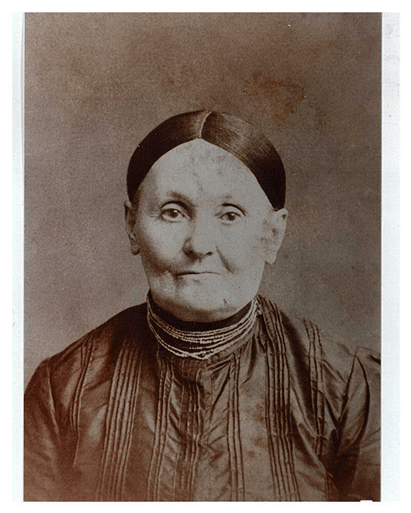
Bryna Dvorkin Krasner sits like royalty next to her king, husband Mordechai, also known as Mottel. She wears no crown, only the traditional matron’s sheitl (wig) to ensure she’s unattractive to other men. Her eyelids draw heavy curtains over eyes that perhaps have seen too much and cannot absorb this strange city of Newark, New Jersey. She wears tightly pleated black taffeta with seven tightly strung strands of white beads around her high collar. Seven strands for the seven children she has given birth to?

Her lack of teeth—no false teeth for her—accentuates her high cheekbones. She is all about tradition. Yet, she has been known to consistently lie about her age to U.S. Census enumerators. After more than a decade in America, she is now younger, so she says, than she was when she arrived (at sixty). Gray tufts of hair peak out from under the wig and her eyebrows have nearly disappeared into the deep lines of her face. It could well be that she never actually knew her age for certain. When other women at sixty might have been thinking about their final days, Bryna instead may have said, “Mottel, grab the featherbed and the candlesticks! We’re going to America!” She and Mottel weathered the storms of the Atlantic and arrived in September 1901, too late to stop the marriage of daughter Chaike to the presumed ne’er do well, Sam Williams, who already had two daughters through previous relationships.

We only know about six of Bryna’s children: Doba, Malka, Hillel Meyer (Meyer or Mike in America), Chaike (Ida in America), Mendel (my grandfather, Max), and Hesia (Bessie in America). Of these, all but the elder two came to America. The immigrant and the American-born family members come together in a photo taken in Newark, New Jersey in 1912. Doba’s daughters are here, the eldest with her two New York-born daughters. Malka’s daughter Minnie is here, too. Meyer brought her over, but one daughter stayed behind in Russia. While Ida is not in the picture, two of her big-bowed daughters are.

In the photo, those located closest to Bryna are grandchildren and great-children, a mix of Old World and New. Within just a few years, Doba and Chaike (a.k.a. Ida) would be dead. Mottel and Bryna’s brother Chaim Ber would pass in 1915. Chaim Ber had been the first of the family to come to America, in 1886. With so many of her close family now gone, black taffeta became her staple.

Bryna becomes a fixture among her children and grandchildren. Though her daughters-in-law may find her abrupt and caustic, her grandchildren adore her. Ever in her black taffeta, she stands in for the motherless Williams children. She brims with a universal love that transcends language, although her grandchildren may well have known her Litvak dialect of Yiddish. Black taffeta means respect for the dead, respect for tradition. It’s Bryna’s job to teach it to the American grandchildren and great-grandchildren. They can ask, “Bobe, why do you wear black taffeta all the way to your neck, to your wrists, and to the ground?” She’d bring the children into an embrace, plant each one with a sloppy, toothless, wet kiss. Each would feel the silkiness and fragility of the taffeta. Bryna would say, “I need to keep these memories—my husband, my daughters, my brother—as blessings. I will remember and respect them always. I mention their names every Friday at sunset as I light the Shabbos candles. Every Yom Kippur. Every Yahrzeit of their deaths. I hope when the day comes, you’ll do the same for me.”

By 1920, Bryna is about 80 years old. Her children have (finally) married. In one photo, granddaughter Adele, named for Ida who died of post-partum hemorrhage, sits on her lap. In another photo, Adele wraps an arm about Bryna’s shoulder while her mother holds her. Ida’s daughter Nellie, now about 17, tenderly places a hand on Bryna’s shoulder. Bryna wears a sweater, American style. The sheitl has given way to a kerchief. Bryna takes the name Bertha for Newark census enumerators and city directories. But for her, a name change does not change who she is and who she needs to be.

Her children and grandchildren, that is Bryna’s world now. Having come from the unpaved streets of wooden shacks of White Russia to the wooden tenements of Newark’s Third Ward, she straddles the Old and New Worlds. Grandchildren on both sides of the Atlantic. Able to cook for one set but not another. Russia has now become the Soviet Union. Letters to family there don’t come as often as before. Bryna sees the opportunities her sons have here to own their own businesses, Meyer in tailoring and Max, in groceries and dry goods. Even Bessie had her own business.

The respect for Bryna is palpable. She rests on a chair outdoors while others stand and the camera readies. Children intuitively know whom they can trust, and Bryna’s grandchildren trust her.

Her tradition becomes especially noticeable as the 1920s proceed. The hemlines of her daughter and daughters-in-law rise above the ankles, but her own graces the dirt and grass beneath her sturdy footwear. Her taffeta blouse hangs over her bosom like a feed bag and the billowing sleeves narrow drastically at the wrist. She is tightly connected, tied tight to family and to the fleeting practices of the traditions her own grandparents taught her. In this photo, her cheekbones suggest a smile under her losses, thinking about the better future her grandchildren may bring. At least three of her great-grandchildren, myself included, are named for her. Immigration has been worth the sacrifice.

Bryna with Adele and the Williams kids
Bryna with Meyer and Bessie


About the author
Barbara Krasner teaches in the Liberal Arts division of Mercer County Community College. She also serves as Director, Mercer Holocaust, Genocide & Human Rights Center. She holds an MFA from the Vermont College of Fine Arts and is a doctoral candidate in Holocaust & Genocide Studies at Gratz College outside Philadelphia.

The Bather

Ilene Dube


Lately I’ve become aware of bathing facilities in unexpected places. Faced with the temptation, I find I cannot resist.

At the public access station where I work, the restroom has a shower alongside its single stall. This is odd, because the building has been office space since it was constructed in the 1950s. At that time, employers had yet to offer bathing facilities as a perk. Perhaps an opportunistic builder wanted to cover all the bases.

At the natural foods grocery store where I shop, one of the two all-gender restrooms has a shower alongside the toilet. I wonder if the shower is for kitchen staff  who would otherwise go home smelling of ginger, garlic, and cardamom.

The Victorian building in which the gluten-free bakery is housed was indeed, at one time, a residence. Whenever I stop in for a knish or a vegan wrap, I make it a point to use the restroom, just to fantasize about luxuriating in its magnificent claw-foot tub. I tease the staff that I’ll return in the night to take a bath. They must hear this all the time because they don’t even fake a smile as I drop coins into the tip jar.

Back in the office, I hear the monitor in the station manager’s office broadcasting a documentary about public bathing. “From Russian banyas and Japanese onsens to Turkish hammams and Finnish saunas, immersing in hot water to release toxins has been practiced since the Neolithic Age,” the voice-over ethnologist tells the interviewer.

Painted depictions of steamy wood cabins and zaftig bathers appear on the screen. “In Russian banyas it is not uncommon to wear felt hats,” says the ethnologist, now on camera in a gray wool cloche with Ukrainian embroidery.

The station manager switches to a locally produced show in which the guest interviewee, a candidate for town council, is fulminating about the state of the world: “…from the high-level cover-up by the drug industry, to the wildfires and flooding and plastic detritus winding up in the intestines of baby albatrosses; the invasion of the spotted lantern fly and emerald ash borer; and now the resistance to fact-based science and medicine… No wonder we are seeing a rise among those living on the streets.”

We have aired numerous documentaries about programs to help people who have lost their way, from alternative housing solutions to art therapy programs. Restoring personal hygiene can be a first step toward regaining a sense of worth, according to one.  The chronically unhoused are more approachable by helpers when they have access to bathing facilities.

As a journalist, I try to experience what my subjects have been through, in order to better show their perspective. Or could it be that I became a journalist because I wanted to absorb myself in others?

I decide to test out the shower at the TV station late at night when no one is likely to walk in. There is no lock on the door, and the shower has no stall or curtain.

I usually keep my gym bag in the car, packed with towels, shampoo, conditioner, soap. I stuff the gym contents into my camera bag. My towel is bulky and just barely fits—I can’t zip the bag completely shut, and a flap protrudes. Out of the corner of my eye I see a mermaid fin, then realize it’s just the towel corner.

I am editing a documentary about an organization teaching sewing skills to unemployed women. As my coworkers filter out for the day, I finesse the continuity of a social worker’s speech, along with B roll showing fish pillows the clients have created. Fifteen minutes after the last worker departs, I nuke a frozen dinner and eat it while checking e-mail. After digesting, I walk around to make sure the coast is clear, then haul in my bathing supplies. As a measure of security, I block the door with my camera bag.

It’s a good thing I packed flip flops because the bathroom floor at the TV station is not what I’d want to step on in bare feet. It would have been ideal if I’d brought along a terry robe, but there’s no way that would have fit in my camera bag.

There’s a separate nook that serves as a dressing room for TV guests. I spread out the clothes I remove, then wrap myself with the towel and carry the basket of toiletries to the shower.

Apparently the fixture has not been used in ages. The lever is impossible to turn. I struggle until beads of sweat form on my forehead but the lever will not budge. I’ll have to come back with a wrench. I pack up my bath supplies, then repeat steps A and B the following night, this time with tools. I use a hand towel to protect the chrome lever, then turn the wrench. It is still extraordinarily difficult but finally it gives way and cold rusty water spurts out, staining my towel orange and causing me to shiver.

I wait and wait but the water does not warm up.

Finally, I take the soaking wet towel and wrench and struggle to turn it off, but it will not close. Water gushes at a steady pace.

I dress, pack up the wet washcloths and towel, and clean up as best I can. The only evidence is the water. I am simultaneously shivering and sweating from fear of getting apprehended.

Emerging from the ladies’ room, I check the hallway in either direction, and steal back into the editing suite. I put on my coat, shut down the computer, and grab my bag to leave. On the way toward the exit, I hear the janitor mopping the floor at the other end of the hallway. I skedaddle without looking up.

The next day, I notice the plumber’s van parked outside the TV station. A memo goes out stating in no uncertain terms that the shower in the lower level restroom is not for staff use. In fact, the entire restroom is closed for two days as the plumbers work on the repair.

We are instructed to use the restroom at the affordable housing office, located in the same building. There had recently been a fire at one of the community housing sites—an elderly resident had fallen asleep in the bathtub with candles burning and subsequently drowned. The candle dropped on her robe, which was all cotton, not a fire-retardant fabric, and the fire spread quickly. Thirty residents of the subsidized unit lost their homes. There is a fund drive to help them out, and I contribute what I can.

The shower at the health food store looks to be in better shape. The bathroom has been redone with white subway tiles and shiny chrome fixtures. I fill a reusable grocery bag with my bathing supplies. During the middle of the day, I enter the restroom as if I just need three minutes to perform the usual bathroom functions. Before stripping off my coat and clothing, I test the water. Again, the knob is tightly shut, but I have brought along a piece of rubber with which to grip it. Sure enough, it loosens!

The bakery department is on the other side of the wall—I can smell the yeasty dough. Now I worry that they will hear the rush of the water. I turn it ever so gently. Again, the water is cold and rusty, but soon it warms up.

The health food store has various soap products on the shelf for customers to sample. I get a feeling this is going to be a delightfully fragrant shower. I quickly undress and lather up, giving myself a quick shampoo with something called Selkie Soap with Sea Buckthorn and Ylang-ylang. The water has turned delightfully warm and I would have enjoyed luxuriating longer, but I quickly rinse off, towel dry and dress. Just in time, as there is a knock at the door. “Be right out,” I shout, and shake my head to dry my hair. I quickly mop up the wet areas with paper towels, then emerge from the restroom with dewy skin.

When I pass the bread window I see the baker looking at me with a scowl. I run my fingers through my short wet hair, ignoring the stares as I head for the exit.

“Mmm, you smell good,” says a woman in the cheese aisle. “Is that the Selkie Soap?”

The bath at the gluten-free bakery is going to be more relaxing, I anticipate. No one ever goes up to the second floor, where it’s located. I’d have plenty of time to soak. The tub does look a bit gritty so I give it a quick swish. It would have been nice to have had a bath mat, but it would have made my bag too bulky. In my haste at the health food store I had absent-mindedly packed the Selkie Soap, so as the water runs I pour in the viscous liquid and the room fills with the scent of ylang-ylang.

It does take a good long while for the tub to fill. If I were waiting in my own home I’d be listening to the radio, but that would draw too much attention here. I don’t want to put the water on full force because of the noise.

On the wall is a poster of Pierre Bonnard’s “Bather”; the subject is completely submerged in the tub. I’ve read that Bonnard’s model/muse/lover Marthe was secretive about her name, age, and family, and was a paranoiac recluse with poor health. She self-medicated with hydrotherapy, bathing several times a day. One of Bonnard’s lovers, a young friend of Marthe’s, drowned herself in the tub when Bonnard spurned her for Marthe.

I get in while the water is shallow and close my eyes as I slink down. Just as I am completely relaxed, there is a knock at the door.

“Right out,” I say, trying to release the water while minimizing the gurgling sound. I rinse the soap from my body, then rinse the soap scum from the tub. The knocking persists, and I towel off, giving myself a short massage with cardamom body butter. At least I don’t have to deal with my hair, which has stayed out of the water. I quickly dress, pack up my supplies, wipe the steam off the mirror and a few wet spots on the floor.

When I open the door, the head waitress is staring at me sternly, arms folded. I can tell she is also stifling laughter. Surely she dreamed of taking a bath here herself and is jealous that I’ve actually done it. She can’t find the words to reprimand me, so I blithely make my way down the stairs, one hand on the curvilinear balustrade. I love this old building, with its creaky old wood. Downstairs, I see the manager and the owner looking up at a drip drip drip in the pressed tin ceiling.

A few weeks later I lose my job at the TV station—they tell me there have been budget cuts. I am given a day’s notice to pack up my things.

It is hard finding new work at my age, and after a few months of not being able to pay the rent, I move in with my brother, sleeping on his couch. My brother isn’t the best of housekeepers—his bathroom is fairly grotty. He has only a shower, no bathtub—thank goodness, I don’t want to have to clean up a bathtub. A shower, in my view, is self-cleaning.

Staying with my brother, I have a nightmare. While visiting the city museum, housed in an Italianate former mansion in the center of an historic park, I encounter a jewel of a clawfoot tub. Checking to make sure I am alone, I turn on the faucet. An alarm goes off, and miniature police arrive. They manage to handcuff my big toe and pull me out—though tiny they are strong. I notice that one of the officers is the ethnologist in the felted Ukrainian hat. “Why did you do it?” he interrogates.

“Because it was there.”

After a while my brother grows tired of hosting me, and I find myself moving from place to place. Fortunately, the weather has warmed. My gym membership expired and I am in arears on the insurance payments, but I still have my car. I am no longer welcome at the health food store nor the gluten free bakery, but the library offers most of what I need.

The community housing office has rebuilt the unit that burned. The residents haven’t yet moved back in—there are inspections and approvals underway. It occurrs to me that I’m now eligible for subsidized housing. I go to look at the model apartment. The leasing agent has taken a prospect on a tour, and I am left to wander the model on my own.

On a coffee table I see a raggedy copy of a collection of John Cheever stories. I thumb  through to find “The Swimmer,” about a 1960s suburban man who, after a few drinks, sets out to swim home through all the swimming pools in his county. At one point, when he has to swim in a particularly dank pool, he reminds himself that he is a pilgrim, an explorer, and takes the plunge.

The bathroom in the model apartment includes a tub shower stall. It still has the manufacturer’s stickers on it but that doesn’t stop me. I turn on the water and let it flow, remove  my clothes and step in. I pour the Selkie Soap.

I hear the familiar knock, faintly this time. “I’ll be a while,” I say, lighting the candle that had been left on the sink. The air is cool, and I slip down to fully submerge.


About the author
Ilene Dube is a writer, artist, filmmaker and curator. Her short fiction has appeared in more than a dozen literary journals, including Kelsey Review.

They Still Go to the Big City: Reflections on My New York Salad Days

Karen Carson


In the decades between college graduation in Boston at age 20 (I’d graduated high school in New Jersey at 16), and graduate school in Lawrenceville much later, my friends threw me a going away dinner, we packed up my posters, my books, and my newly-earned Bachelor’s degree, and I boarded the Amtrak train for New York City.

One evening, my cousin, Alonzo met me at the edge of the stage with a dozen red roses, as I took my bows with the rest of the dual cast of the opera, “Carmen.” Performed on a split stage, one cast performed the familiar tragic love story, the other presented an updated, “uptown” version, entitled, “Carmen’s Community”. My character had no name, no lines–and no salary, for that matter–so, channeling the great Anna Magnani from “The Rose Tattoo”, I was determined to make my mark, standing out from the other “cigarette girls.” Without warning the playwright  or the other actors, as we danced around Don Jose to the beat of The Habanera, I suddenly pulled out a pair of orange striped boxer shorts that I’d bought at the dollar store and, going off script, tossed the underwear in his face, implying that the character had left them at my flat the night before! Avoiding the director’s eyes, I basked in the applause, milking it for all it was worth.

At Astoria Studios where there was an audition for Francis Ford Coppola’s movie, “The Cotton Club”,  I didn’t look like a young Lena Horne or Ethel Waters even on a good day, but I had worn a flower on the side of my head freshman year in college in an homage to the great Billie Holiday, and I’d impressed my teacher and classmates at HB Studios with an excerpt from her autobiography that I’d adapted into an excellent monologue. They had been moved. They’d clapped. Several classmates approached me afterwards to work with me. This audition was a cattle call so, if nothing else, I’d get more auditioning experience, and someone would keep me in mind for a future role. I’d cast plays before, and I knew that sometimes the people in charge of an audition were hoping to get their casting cues from whoever showed up.

I temped for weeks at a time at law firms, airline companies, consultant firms, and insurance companies, backing up data at the end of each day on huge floppy disks. At evening ticket sales jobs, I often fell in with a fun group of coworkers who shared my dubious view of being pressured to cold call families who could never afford season subscriptions. At least we got commission and a complimentary ticket. Some of us managed to sneak out early from the office, dragging tote bags of snacks and sodas to Central Park to enjoy the opera for free. We’d spread our blankets out so far away from the action that Pavarotti looked tiny enough to fit in my palm. Wolfing down Smilers subs–one guy made the best stuffed grape leaves I’ve ever tasted!–we enjoyed being young at a time in our lives when we had no mortgages, no children, and could temporarily keep our college loan debt at bay. One evening after work, we met actor/producer/director John Houseman at a Q & A at The New York Public Library on Fifth Avenue and 40th Street.. Mr. Houseman, known to my generation as the imposing Professor Kingsfield from the film “The Paper Chase”,was engaging and approachable in a vivid lemon sherbert sweater. I was so close to him, that I could see his hearing aid behind one ear and the liver spots on his hands.

After couch surfing at my cousin’s tiny loft on West 55th Street, I had the opportunity to return the favor when he needed a part time job. Although I had long since gotten rid of my childhood habit of tagging after my older cousin, I still missed him, and wanted to spend more time with him. Alonzo was a star student in Luigi’s master dance classes near Lincoln Center, and needed some extra cash before he went overseas to dance in a revue. Though he was a talented musician and dancer, he had often been passed over for many roles–including “A Chorus Line”–because he stood a head taller than most dancers. Tall male dancers paired with tall female dancers in heels were often in more demand out of the country and in Puerto Rico.

While sightseeing, I was tempted to join a group of gorgeous guys I’d run into at the Staten Island Ferry terminal who told me I was cute and looked just like Janet Jackson, but I thought better of it. I  enjoyed my role as ersatz ambassador to visiting relatives and friends. Back then I could walk for miles without stopping to rest, looking up at the cables of the Brooklyn Bridge, and looking down at the cars below me and across to the Manhattan buildings before me. We passed NYU (where early one morning a stranger on a bicycle gallantly handed me a single red rose!),walking  far up and over to Columbus Circle (near the hospital where Alonzo would die), and finally to the fountain at the Lincoln Center plaza.

Most people lagged behind during my “walking tours”, but not my friend, Yuko. She was in New York on an education visa, staying with her uncle (whom she finally admitted was actually her older married boyfriend, necessitating a hurried, unplanned return to Japan when his wife came to visit).  We were an unlikely pair–a tall, curly-haired girl  and, a head shorter, the straight-haired, small town Kanagawa-ken adventurer in an “I Love New York” tee shirt, trying very hard to look Tokyo-chic in knock-off Liz Claiborne designer sunglasses. Yet both of us–still mortgage and baby-free– were much more alike than different.  Although hardly fluent in each other’s native language, we understood each other. I’d taught myself a few basic phrases in Japanese, could write my name in katakana, and had a good Japanese accent, while Yuko’s heavily-accented high school English taught by a native Japanese, made her shy about  speaking English with anyone else but me. Yuko and I shared an offbeat sense of humor, a curiosity about the world around us, and a love of Junior’s strawberry and pineapple cheesecake!

I still look at old photos of Yuko and I, taken at the Brooklyn Botanical Gardens at the annual Cherry Blossom Festival,  and at the memorial I held for Alonzo in space I rented at Brooklyn College. I designed the memorial program myself,  with Alonzo’s acting headshot on the front, and on the back cover, the most adorable grade school photo of him with a crew cut, and a toothy grin, wearing a little bow tie! 

My teacher, the late William Hickey (“The Producers”, “National Lampoon’s Christmas Vacation”), trusted all of his students to choose our own scenes, and when and with whom we would present them. I had free rein to cast myself however I wanted to. My character choices  ran the gamut of styles from young, headstrong Lady Teazle in the Restoration comedy, “The School for Scandal, to Celia, the wife of a morphine addict, in  “A Hatful of Rain” to Celimene (in an Afro!) in Moliere’s 17th century comedy, “The Misanthrope”, to Catherine in “A View From the Bridge”, set in an Italian household by the docks in 1950s Red Hook. I cast  a classmate who was a retired high school principal as my father, King Lear. To get closer to a guy I had a crush on, I cast us as Vladimir and Estragon in Samuel Beckett’s “Waiting for Godot”. I cast myself as Eve Carrington in “The Wisdom of Eve”, the basis of the film, “All About Eve.”

I am forever grateful to my beloved teacher, “Uncle Bill”, for allowing me to stretch my creative muscles even further than I dreamed they could go in a wide range of juicy roles. A small, delicate, leprechaun of a man with gentle blue eyes, he chain smoked from his corner desk, and sipped from a coffee mug of unknown contents, giving  an honest, yet never brutal critique of our work, as we sat across the stage from him, eager for his approval. Uncle Bill knew just how far to push each one of us individually. Like the handful of remarkable teachers I have studied under throughout my life, Uncle Bill was spot on in his assessment of individual talent, and knew precisely how to nudge his students toward greater accomplishments.

Early on, I had tried to twist Alonzo’s arm to do a scene with me but, die-hard night owl that he was, he refused to get up by 10:00 on a Sunday morning to make it to my 11:00 class! I regaled him with highlights of the scenes I’d cast him in. I promised a standing ovation. I begged. I whined. I promised him an entire pint of vanilla Haagen Dazs ice cream that he wouldn’t have to share with me. But no amount of cajoling would get him up before noon. “My heart isn’t even beating yet at that hour!” he opined. The guy in my class whom I was crazy about took me to his dad’s loft to rehearse our scenes and we, unfortunately for me, did just that. We rehearsed our scenes, and nothing more. Sigh.

Duncan, “Birdy”, and I, and all the other students were artists in a safe space with a teacher who loved teaching just as much–maybe even more so–than the film, stage, and television roles that made him a recognizable character actor. I miss him dearly.

One night when I got home, there was a message waiting for me. It was one sentence explaining that my father had died of a heart attack. Daddy had retired early at 52  with a government pension and secure insurance. It had been the carrot that kept his generation of veterans in one place for so long. He was glad to have  more time to go fishing with our neighbor, Mr. Sanchez, and to go hunting with his beagle and longtime hunting buddy, Mr. Morgan. Their friendship went far back to their army days and they, as did their wives before them, would all die shortly afterwards.  I hadn’t spoken to my dad in quite a while. It would be too easy to link my close relationships with my teachers to that estrangement. Too easy, in fact, but all too true.

When my older sister and my younger brother and I cleared out the family house, I found an old drawing on the floor that I’d made for my mother when I was seven and she was dying in the hospital. I had drawn purple, green and red crosses and written “God bless you” across the bottom of the paper. I also found my dad’s pocket phrase book in German and English with useful phrases like “Halt!” and “Don’t shoot!” for any unlucky American soldier under fire who may wander off and get lost on his way back from the latrines.

I’d been living in New York City when my father died, so I took a picture of my mother’s headstone from twenty years before to the stonemason to try to match the style. I instructed him to engrave a line in Norwegian from a favorite movie of mine. In the film, “The Days of Wine and Roses”, Lee Remick’s character toasts new boyfriend Jack Lennon with, “Til sammen i himmelen”. No doubt intrigued at this request from a young woman with brown skin, the stonemason asked me, kindly, if I was Norwegian, and what the words meant. “No, I’m not Norwegian,” I said. “It means, “together in Heaven”. “That’s very nice. Don’t worry. I’ll do a good job”, he assured me.

In years to come, on his birthday or the anniversary of my father’s death, I would sometimes make sausage and peppers with the good crusty sub rolls he used long ago on Saturdays while my brother and I lay on the living room floor, our eyes glued to the television in front of us..

I tell myself that my father is happy and free now, finally reunited with my mother. Maybe driving that old fashioned car in the picture they took when they got married. Or maybe it’s November where he is, and he and Mr. Morgan are wearing their orange hunting caps and vests, standing side by side, holding up the pheasant or duck or rabbit that they’ve caught, enjoying the savory smell of the onions and gravy they will cook them in.  And they are smiling.

During the early years of the AIDS crisis, Alonzo had died from kaposi’s sarcoma, a complication of AIDs, but I had to call the hospital myself to learn this. During my last visit, he’d periodically pull aside his oxygen mask to laugh and talk with me, pointing admiringly to my sweater’s pastel design. I was happy to get the thumbs up from one of the most popular guys in our high school who’d been voted “Best Dressed” year after year. He was the star!  And he was my cousin! Image that! Alonzo had come out of a coma and, according to a friend of his, had even been able to walk to the bathroom on his own. But over the phone, a hospital operator had paused, telling me  there was no one by that name in that room or in the patient directory at all. I assured her that I was aware that hospital policy would prohibit her from telling me that he was in fact dead. She couldn’t confirm my identity over the phone. I paused, giving her the opportunity to tell me that I was wrong. But she did not.


About the author
Karen Carson is a Trenton resident and contributing writer for the Trenton Daily online publication. In addition to writing observations on cultural and historical aspects of the City of Trenton for the Trenton Daily, Karen Carson was also interviewed by U.S.1 about her original monologues on coping with job loss from the 2008 recession. Karen was also a featured guest on 1077TheBronc’s “Your Career is Calling”, and NJNTV’s “Classroom Close-up”. A former manager of volunteer audiobook recording talent and operations for a radio reading service broadcast for the blind, Karen was also recording liaison for local authors, producer of an international audio conference, producer and host of a book club for the blind, and speaker for state conferences and workshops on the topic of volunteerism.